
Understanding Administrative vs. Voluntary Dissolution for Non-Resident US Business Owners
1. Introduction to Business Dissolution
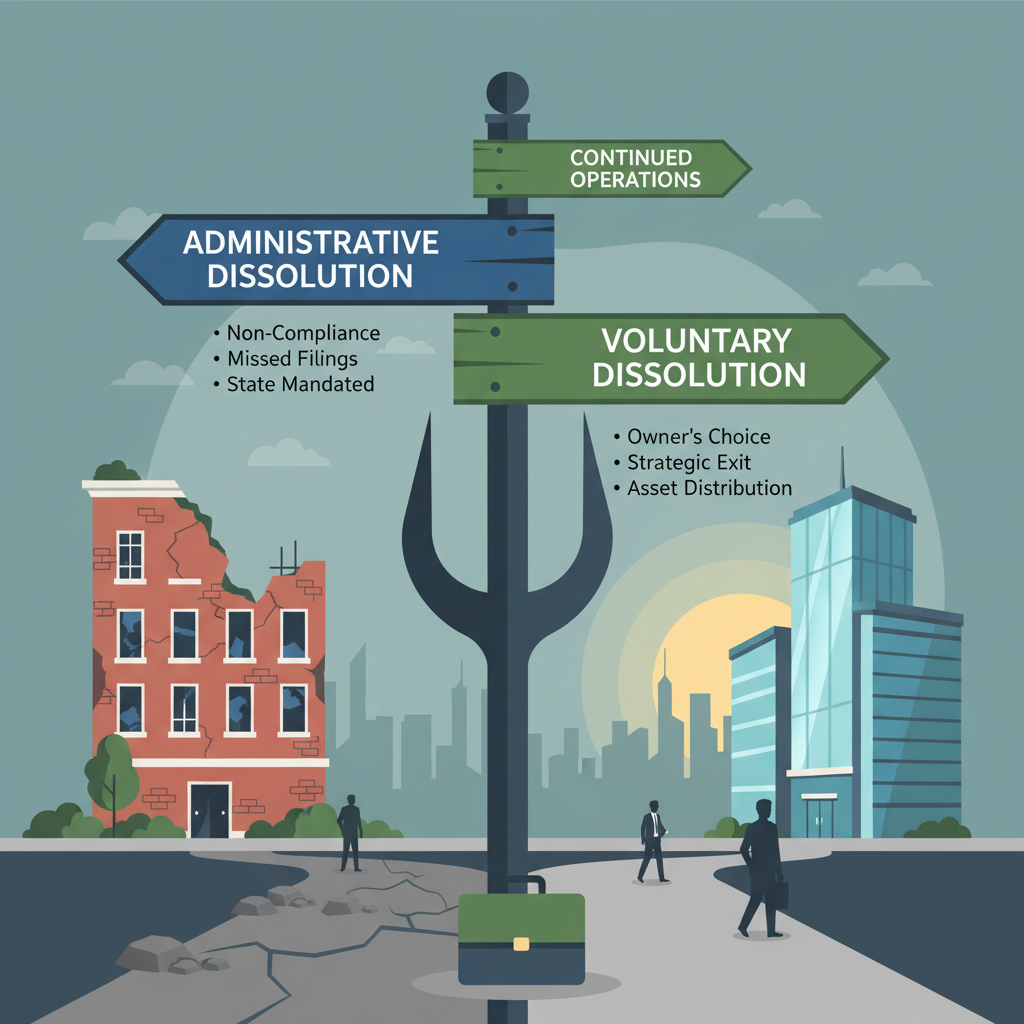
Business dissolution is an inevitable part of the entrepreneurial journey for many. While a great deal of effort is focused on starting and growing a business, understanding how to properly close or dissolve it is equally crucial. For non-resident founders considering starting a US LLC or corporation, grasping the concept of administrative and voluntary dissolution is essential to navigating their business lifecycle.
1.1 What is Business Dissolution?
Business dissolution refers to the official closure of a company, whereby it ceases operations and legally terminates its existence. This process ensures that the business is free from further legal obligations and liabilities, making it crucial for founders to understand the nuances of how it works.
2. Administrative Dissolution Explained
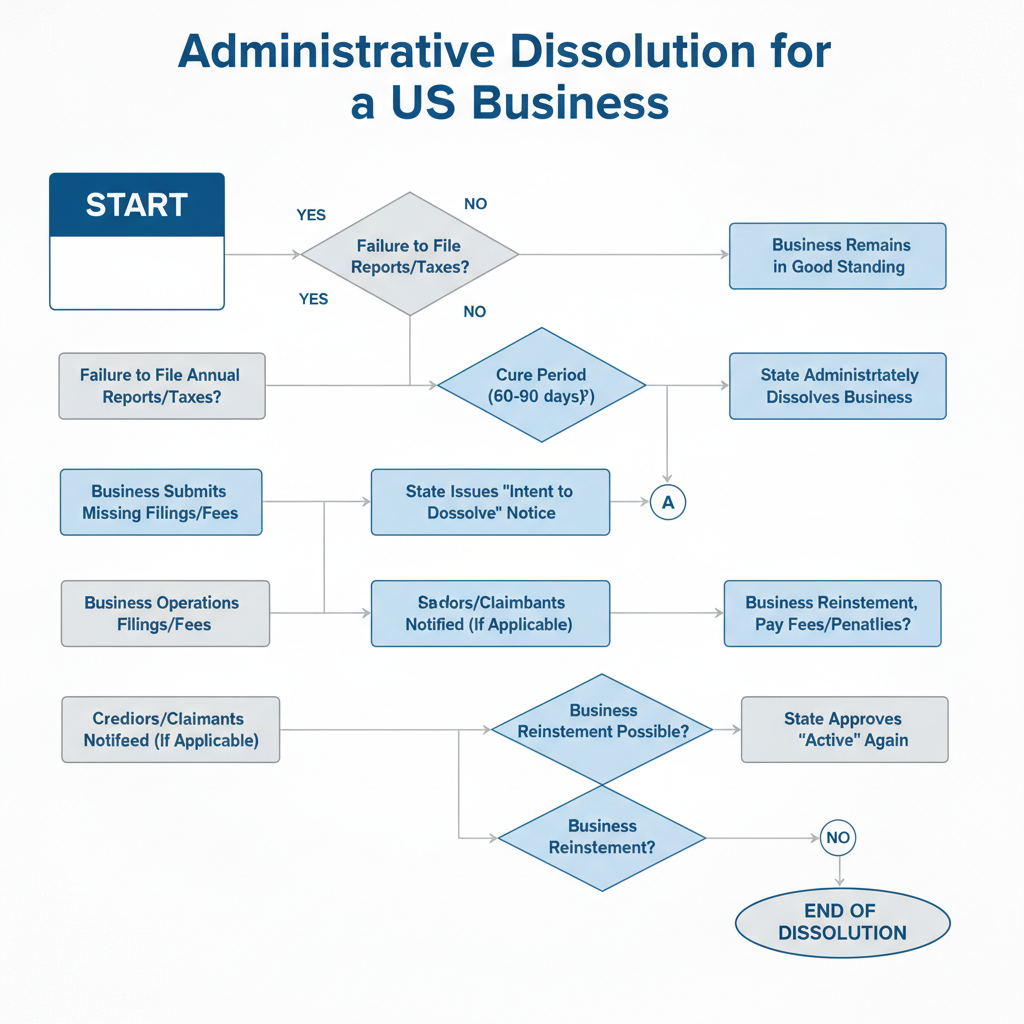
Administrative dissolution occurs when the state government steps in to shut down a business. This type of dissolution typically happens when a company fails to meet certain legal requirements or maintain compliance.
2.1 Causes of Administrative Dissolution
Several factors can lead to administrative dissolution, including:
- Failure to submit annual reports as required by law.
- Not maintaining a registered agent within the state.
- Neglecting to pay necessary franchise taxes.
When these obligations are not met, the state may administratively dissolve the business, revoking its permission to operate within its jurisdiction.
2.2 Implications of Administrative Dissolution
Even after an administrative dissolution, a business technically remains a legal entity but loses its good standing. Thus, conducting business activities can lead to personal liabilities. Also, the dissolution process might involve potential legal risks, such as lawsuits.
2.3 Reversing Administrative Dissolution
In some cases, businesses can reverse administrative dissolution by addressing the issues that led to it. Typically, this involves:
- Filing overdue reports.
- Paying any outstanding taxes.
- Submitting an application for reinstatement.
Each state has specific rules governing reinstatement, so it’s vital for business owners to understand these regulations.
3. Voluntary Dissolution: A Deliberate Closure
Unlike administrative dissolution, voluntary dissolution is initiated by the business owners themselves. This decision is often made due to strategic changes, the desire to retire, or move on to new ventures.
3.1 Steps in Voluntary Dissolution
Voluntary dissolution involves a structured process, which includes:
- Owners voting to dissolve the business.
- Filing dissolution documents, often called Articles of Dissolution, with the Secretary of State.
- Settling debts and obligations.
- Liquidating assets.
- Filing final tax returns.
- Distributing remaining assets to owners.
Overall, voluntary dissolution offers a controlled environment for closing a business, minimizing risks and liabilities.
3.2 Irreversibility of Voluntary Dissolution
Once voluntarily dissolved, a business cannot be reinstated in its original form. To restart operations, owners would need to form a new entity.
4. Key Differences Between Administrative and Voluntary Dissolution
Understanding the core differences between these two forms of dissolution is crucial for founders:
| Topic | Administrative Dissolution | Voluntary Dissolution |
|---|---|---|
| Initiator | State government | Business owners |
| Process Trigger | Non-compliance with legal requirements | Owners vote to terminate the business |
| Control | Little to none | High |
| Reversibility | Possible, through reinstatement | Not reversible |
| Business Standing | Loses good standing | Orderly closure |
| Liability Risk | Higher | Lower |
5. Role of Registered Agents in Dissolution
The registered agent plays a significant role during a business dissolution. Even after dissolution, the registered agent remains the point of contact for legal matters until formally removed.
5.1 Importance During Administrative Dissolution
If the business faces administrative dissolution but is not officially terminated, the registered agent continues to accept legal notices, which can prevent further complications.
5.2 Steps to Remove a Registered Agent
A dissolving business should ensure the registered agent is properly removed from state records by filing relevant documents. Only then is the agent released from obligations.
6. Protecting Yourself During Dissolution
Whether facing administrative or voluntary dissolution, business owners must take strategic steps to protect themselves.
- Decide on the future of the business: reinstatement or closure.
- Consult legal advice to ensure proper handling of dissolution procedures.
- Communicate clearly with registered agents.
- Address all outstanding legal notices promptly.
Neglecting these steps can lead to severe consequences, including lawsuits or personal liabilities.

7. Final Considerations and Next Steps
For non-resident founders contemplating a US LLC or corporation, understanding the dissolution process is part of preparing for the future. Whether facing administrative or voluntary dissolution, it’s imperative to ensure that your business is fully wound up before moving on. Utilizing a reliable service provider like FastLLC can help ensure compliance and provide peace of mind. FastLLC offers assistance with obtaining EINs for non-residents, securing registered agents, and more.
Whether you’re forming, maintaining, or dissolving a business, having expert guidance can make all the difference. As you consider your next steps, think about the support services that can streamline your business operations.
Remember, the journey of entrepreneurship is not just about building, but understanding how to gracefully close a chapter. Should you need more specific guidance, consulting a licensed professional can be invaluable.
For individuals outside the US looking to form and operate a US business entity, FastLLC offers comprehensive solutions tailored to your needs. Explore our formation plans to ensure your business starts off on the right foot.
8. Common Mistakes During Business Dissolution
Business dissolution can be a complex process, and entrepreneurs often make mistakes that can lead to complications. Here are some common errors to avoid:
- Ignoring Outstanding Obligations: Failing to settle debts and liabilities before dissolution can result in prolonged legal battles and creditors pursuing owners personally.
- Improper Filing: Not filing the correct dissolution documents, such as the Articles of Dissolution, can leave a business in limbo and prevent its official closure.
- Overlooking Tax Responsibilities: Neglecting to file final tax returns or address remaining tax obligations can lead to penalties and interest accruing long after the business has ceased operations.
- Failing to Inform Stakeholders: Not notifying employees, customers, suppliers, and other stakeholders about the dissolution can damage relationships and lead to additional complications.
Avoiding these mistakes requires careful planning and attention to detail, ensuring a smooth transition during the dissolution process.
9. Real-World Examples of Business Dissolution
Understanding real-world examples can provide valuable insights into the dissolution process. Let’s take a look at a couple of scenarios:
9.1 Case Study: Retail Chain Voluntary Dissolution
A small retail chain decided to voluntarily dissolve due to the owners retiring. They followed a structured process by voting on the decision, filing Articles of Dissolution, and liquidating inventory. By notifying creditors and settling all debts, they successfully closed their business without legal repercussions.
9.2 Case Study: Tech Startup Administrative Dissolution
A tech startup faced administrative dissolution after failing to submit annual reports for two consecutive years. The founders were unaware of the consequences until they received a notice from the state. By quickly addressing the issues, paying overdue fees, and filing for reinstatement, they managed to revive the business.
These examples highlight the importance of compliance and strategic planning in managing business dissolution effectively.
10. Step-by-Step Guide to Dissolving a Business with FastLLC
Dissolving a business can be streamlined with professional assistance. FastLLC offers a step-by-step guide to ensure a smooth dissolution process:
- Consultation: Begin with a consultation to assess the specific needs of your business and understand the dissolution requirements.
- Document Preparation: FastLLC assists in preparing and filing the necessary dissolution documents with the relevant state authorities.
- Debt Settlement: Guidance is provided on settling any outstanding debts and obligations to ensure a clean exit.
- Asset Liquidation: Support in liquidating assets and distributing any remaining funds to owners.
- Final Filings: Assistance with filing final tax returns and other required documentation to officially close the business.
FastLLC’s services ensure compliance and reduce the stress associated with the dissolution process, allowing business owners to focus on their next ventures.
Frequently Asked Questions
Administrative dissolution occurs when a state government forcibly closes a business due to non-compliance with legal requirements.
No, once a business is voluntarily dissolved, it cannot be reinstated. A new entity must be formed to restart operations.
To reverse administrative dissolution, a business must address compliance issues, file overdue reports, pay outstanding taxes, and apply for reinstatement.
A registered agent continues to receive legal notices for a business even after administrative dissolution, unless formally removed from state records.
Voluntary dissolution is initiated by the owners, allowing for a controlled and orderly closing process, minimizing liabilities and risks.
Share this article



Ready to start your US LLC?
Formation, EIN, registered agent, and ongoing compliance — handled in one place.
Get Started for Free