
How to Navigate Transfer Pricing Rules for Your International Business Operations

1. Understanding Transfer Pricing
Transfer pricing refers to the rules and methods that govern how transactions between associated enterprises should be evaluated for tax purposes. When a company shares resources, services, or personnel with different entities within its group, these transactions can result in obligations concerning documentation, compensation, and tax compliance. As businesses expand their operations globally, understanding transfer pricing becomes crucial, especially for non-resident founders setting up shop in the United States.
1.1 Why Transfer Pricing Matters
Transfer pricing rules ensure that transactions between related entities are conducted under comparable conditions to those that would exist between independent parties, a principle known as the 'arm's length principle'. The intent is to prevent profit shifting and to ensure that each country's tax administration collects its fair share of taxes from multinational enterprises.
2. Applying Transfer Pricing Rules
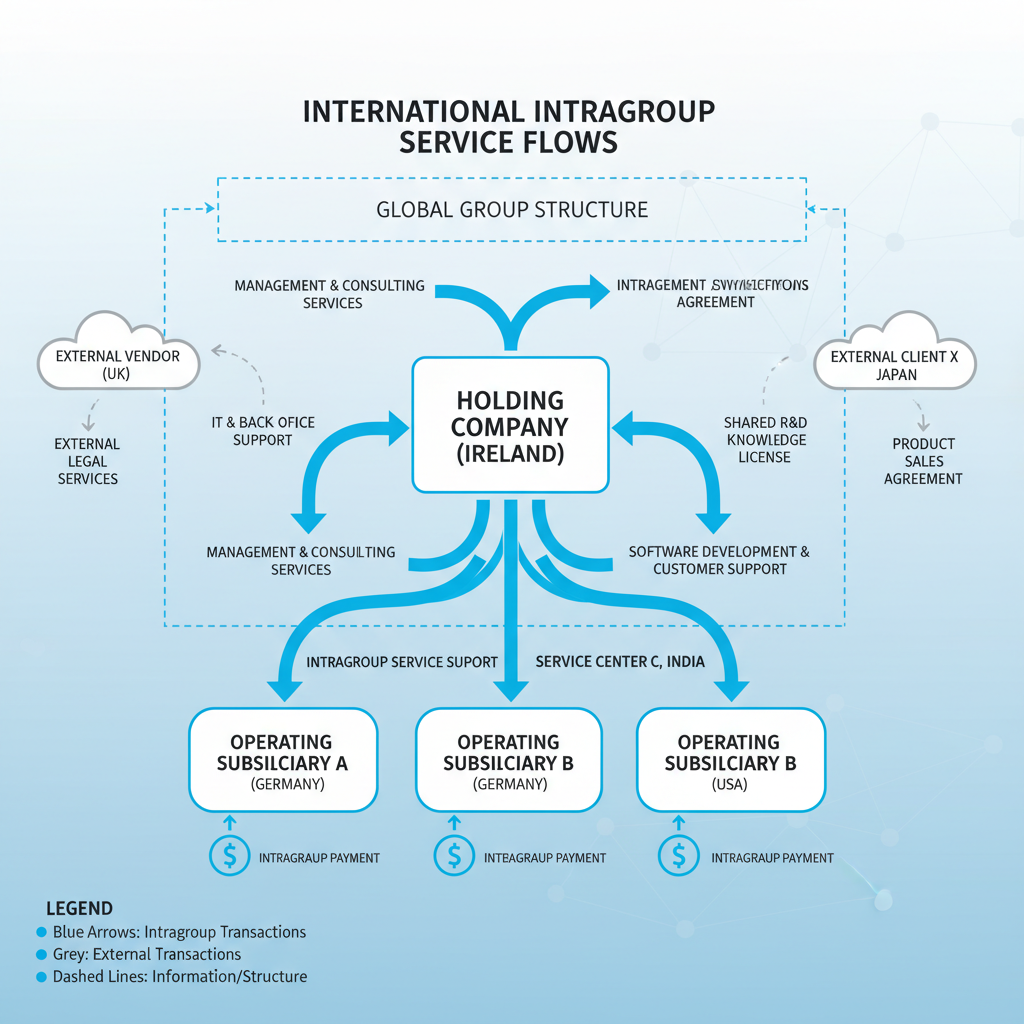
For companies with international operations, it is common to have structures where the US-based entity focuses on contracts, billing, and client relations, whereas teams in other jurisdictions handle areas like finance, human resources, customer service, marketing, or operational support. While these setups may seem operational, they are subject to transfer pricing scrutiny. The OECD guidelines and local laws require careful analysis of these inter-company relationships.
2.1 Identifying Intragroup Transactions
An intragroup transaction occurs when one related company provides benefits to another through services, resource sharing, or value-generating activities. For instance, if a foreign company employs HR or financial professionals who support the US company in their group, the tax authorities may see this as a service rendering, requiring examination under transfer pricing rules.
3. Scenarios Requiring Transfer Pricing Attention
HR teams supporting hiring and personnel management for the US company.
Finance professionals executing administrative or control activities for group entities.
Customer success or operational support teams serving US clients.
Administrative areas shared between related companies.
Internal IT support services.
In these scenarios, it's vital to assess who benefits from the activities and whether the services need to be documented and compensated appropriately.
4. Low Value-Adding Intragroup Services
The OECD recognizes that some services are primarily operational and supportive, lacking strategic significance or direct value generation for the group. These are termed Low Value-Adding Intragroup Services. They typically include routine activities that:
Are administrative or operational in nature.
Don't form part of the group’s main business activities.
Don't involve significant intangible assets or risks.
Aren’t related to strategic planning or competitive advantage generation.

Examples include routine HR actions, financial administration, administrative legal support, and certain internal IT services.
4.1 Benefits of Classifying Services as Low Value-Adding
When services meet the OECD’s criteria for Low Value-Adding, a simplified transfer pricing approach can be applied. Typically, this involves adding a 5% markup to the service's cost, simplifying the compliance process compared to more detailed analyses required for other transactions. However, this depends on keeping proper documentation of the operation, costs involved, beneficiaries, and allocation criteria.
5. Services Not Considered Low Value-Adding
Not every activity between group companies qualifies for simplified transfer pricing treatment. Functions like software development, R&D, intellectual property creation, strategic management, market development, and brand management generally require detailed analysis. These functions often directly contribute to value generation and competitive advantage creation within the economic group.
6. Importance of Documentation
Both US tax authorities and foreign jurisdictions analyze the economic substance of operations, not just their contractual descriptions. Hence, maintaining proper documentation is crucial to demonstrate:
Activities performed.
Beneficiaries of the services.
Cost identification and allocation.
Methodology used for setting compensation.
Failure to maintain accurate documentation can significantly increase tax risks during audits across any involved jurisdictions.
7. Transfer Pricing Checklist
Are there professionals outside the US providing services or support to the US company?
Is there a sharing of teams, resources, or activities between entities?
Do intercompany contracts and documentation formalize these operations?
Do the services qualify as low value-adding intragroup services?
8. Conclusion: Moving Forward with FastLLC
As businesses expand into the US, sharing people, resources, and activities among different group entities is a natural development. Initially focused on business growth and operational efficiency, these structures must be re-evaluated in light of both US and origin jurisdiction transfer pricing rules. By understanding these principles in advance, businesses can strengthen their tax governance and minimize risks related to related-party operations.
FastLLC offers services to assist companies with international operations, helping analyze corporate structures, intercompany contracts, transfer pricing policies, and necessary documentation. This support helps clients build safer operations aligned with current legal requirements in each jurisdiction. For non-resident founders, FastLLC can also facilitate obtaining an EIN without an SSN, including registered agent services, all integral to successfully forming a US LLC or corporation.
9. Common Mistakes in Transfer Pricing
Even seasoned businesses can stumble when navigating the complex landscape of transfer pricing. Understanding common pitfalls can help in avoiding costly errors and potential audits. Here are some frequent mistakes companies make:
9.1 Inadequate Documentation
One of the most common errors is failing to maintain adequate documentation. Companies often neglect to document the rationale behind pricing decisions, which can lead to issues during audits. Proper documentation should clearly outline the transfer pricing method used, why it was chosen, the nature of transactions, and how prices were set.
9.2 Misclassifying Transactions
Another frequent mistake is misclassifying services, which can result in inappropriate pricing strategies. For example, treating a high-value service as a low-value one can lead to undercharging and increased tax liabilities. It's crucial to perform a detailed analysis of each transaction to ensure proper classification.
9.3 Overlooking Local Laws
Focusing solely on OECD guidelines without considering local regulations can result in non-compliance. Each jurisdiction may have specific rules and thresholds for transfer pricing, and ignoring these can lead to significant penalties. Companies must ensure they are aligned with both international and local standards.
10. Real-World Examples of Transfer Pricing
To illustrate how transfer pricing is applied in practice, let's examine a few real-world scenarios:
10.1 Tech Giants and Intellectual Property
Large technology companies often hold significant intellectual property (IP) across different jurisdictions. For example, a US-based tech company might develop software in the US but license it to subsidiaries in Europe. The transfer pricing needs to reflect an arm's length compensation for the IP rights, considering factors like market conditions and the IP's economic value.
10.2 Multinational Retailers
Retail giants operating globally often face complex transfer pricing issues, particularly with supply chain management. A retailer might source products from several countries and sell them in completely different markets. Transfer pricing must ensure that each entity in the value chain is compensated appropriately, reflecting the functional and risk profile of operations in each jurisdiction.
11. Step-by-Step Guide to Implementing Transfer Pricing Policies
Establishing a robust transfer pricing policy requires a systematic approach. Here's a step-by-step guide to help streamline the process:
11.1 Conduct a Functional Analysis
Identify and analyze the functions performed, assets used, and risks assumed by each entity in the corporate group. This analysis will help in understanding the value chain and determining the appropriate transfer pricing method.
11.2 Choose the Right Method
Select a suitable transfer pricing method based on the functional analysis. Common methods include the Comparable Uncontrolled Price method, Resale Price method, Cost Plus method, and Transactional Net Margin method. Each has its specific application scenarios.
11.3 Document the Policy
Prepare comprehensive documentation that details the transfer pricing policies, including the chosen methods and the reasons behind these choices. Ensure that this documentation is updated regularly to reflect changes in business operations or regulatory requirements.
11.4 Monitor and Review Compliance
Regularly review transactions to ensure compliance with the established transfer pricing policies. This step involves monitoring intercompany pricing, updating documentation, and adjusting policies as necessary to remain compliant with evolving laws.
By following these steps, businesses can create a sustainable transfer pricing framework that mitigates risks and aligns with regulatory expectations. FastLLC's expertise in international business operations can aid companies in implementing effective transfer pricing strategies tailored to their unique needs.
Frequently Asked Questions
Transfer pricing refers to the rules that determine how transactions between related companies are evaluated for tax purposes, ensuring they are conducted at arm's length.
They prevent profit shifting and ensure that each country's tax authority collects appropriate taxes from multinational businesses.
These are routine operational services that do not directly contribute to value generation, allowing for simplified transfer pricing treatment.
Businesses should document activities performed, beneficiaries, cost allocations, and the methodology used for compensation.
Yes, FastLLC offers services including EIN acquisition without an SSN and registered agent services, helping non-resident founders form US LLCs.
Share this article



Ready to start your US LLC?
Formation, EIN, registered agent, and ongoing compliance — handled in one place.
Get Started for Free