
How to Navigate Transfer Pricing Rules for International Business Operations

1. Understanding Transfer Pricing Rules
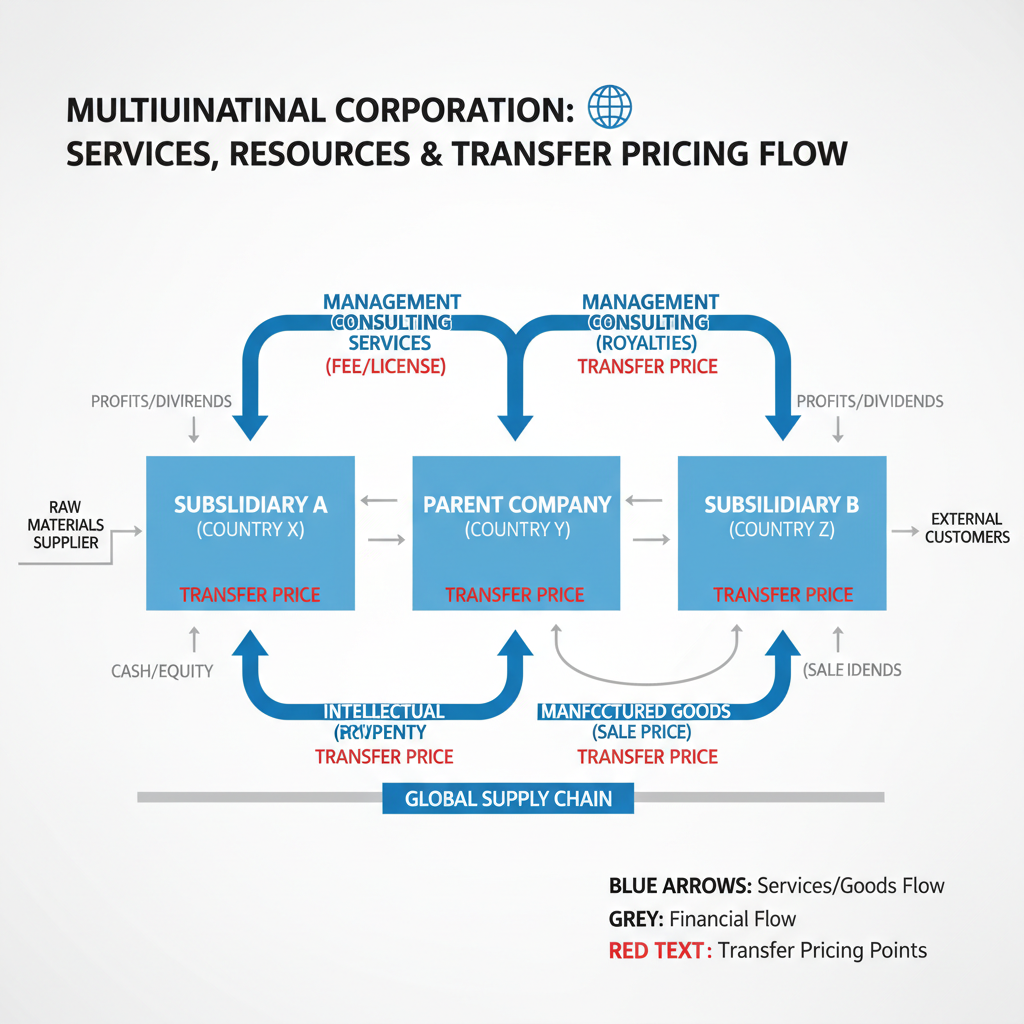
Transfer pricing rules are essential frameworks that dictate how transactions between related entities within a multinational corporation must be evaluated for tax purposes. These rules aim to ensure that intra-group transactions are conducted as though they were between unrelated parties, a principle known as the 'arm's length' standard.
In practice, these rules have significant implications for companies expanding their operations internationally, including into the United States. Such companies often rely on shared resources, services, and personnel across various jurisdictions, necessitating careful documentation and compliance with local and international tax laws.
2. The Importance of Transfer Pricing in International Business
When a company extends its operations to the US while maintaining a part of its workforce and operations overseas, it frequently forms a structure where the US entity handles contracts, invoicing, and client interactions, while overseas teams provide support in areas like finance, human resources, customer service, marketing, or operational assistance.
At first glance, this may appear to be a straightforward operational decision, but transfer pricing rules require careful scrutiny of these internal relationships and transactions. Such rules are aligned with the Organization for Economic Cooperation and Development (OECD) guidelines and the specific tax laws of each involved jurisdiction.
2.1 When Do Transfer Pricing Rules Apply?
Transfer pricing rules typically apply when one entity within a multinational group provides services, shares resources, or otherwise benefits another entity in the group. For instance, a team of finance professionals located outside the US might dedicate a portion of their time to supporting the US operations. Even if no formal invoicing occurs between these entities, tax authorities in the respective jurisdictions might still require that such services are documented and assessed under transfer pricing principles.
3. Key Considerations for Intra-Group Transactions
To evaluate whether your corporate structure aligns with transfer pricing regulations, consider these scenarios:
- HR teams assisting with recruitment or personnel management for a US entity.
- Financial professionals providing administrative or control functions for other group entities.
- Customer success teams or operational support attending to US entity clients.
- Shared administrative functions across related companies.
- Internal IT support spanning various entities.
In each of these cases, it's crucial to determine who directly benefits from the activities and whether the provided services require formal documentation and remuneration.
3.1 Documenting and Remunerating Intra-Group Services
Proper documentation is vital. It not only supports compliance with transfer pricing regulations but also mitigates the risk of potential audits by tax authorities. Documentation should detail the nature of the activities, the beneficiaries, the costs involved, and how the remuneration was determined.
4. Low Value-Adding Intragroup Services
The OECD guidelines recognize a class of services known as Low Value-Adding Intragroup Services. These are primarily support or operational activities that do not generate direct strategic value or involve significant risks.
Common examples include routine HR tasks, administrative finance functions, legal administrative support, and certain internal IT services. These services often qualify for a simplified transfer pricing methodology, which considers the costs of providing these services plus a mark-up, typically 5%. This method reduces the complexity typically associated with ensuring that transactions meet arm's length standards.
However, to utilize this approach, the operation must be well-documented, noting all service costs, beneficiaries, and the criteria used to assign values.
4.1 Non-Qualifying Services
Not all intra-group services fall under this simplified methodology. Services involving software development, R&D, intellectual property creation, strategic management, market development, and brand management typically require more detailed analysis due to their direct contribution to generating value and competitive advantages.
5. The Role of Documentation in Transfer Pricing
Tax authorities, including those in the US, focus on the economic substance of a transaction rather than just its contractual form. Comprehensive documentation should demonstrate:
- The specific activities conducted.
- The beneficiaries of the services.
- How costs were identified and allocated.
- The methodology used to determine remuneration.
Insufficient documentation can significantly increase fiscal risks during audits in any jurisdiction involved.
6. Checklist for Evaluating Transfer Pricing Compliance
To ensure compliance with transfer pricing rules, ask yourself the following:
- Are there professionals outside the US providing services or support to the US entity?
- Are resources, teams, or activities shared among related entities?
- Do intercompany contracts and documentation exist to formalize these operations?
- Could the services be classified as Low Value-Adding Intragroup Services?
7. Why Understanding Transfer Pricing is Crucial
As businesses expand into the US, sharing personnel, resources, and activities across different group entities becomes commonplace. While these structures aim to boost business growth and operational efficiency, transfer pricing regulations necessitate a thorough review of how these relationships are documented and remunerated.
Understanding these aspects beforehand can help strengthen tax governance and reduce the risks associated with related-party transactions. At FastLLC, we offer services to assist non-resident entrepreneurs in navigating these complexities, ensuring your international operations are compliant and optimized for success.
Taking steps to understand and apply transfer pricing rules not only ensures compliance but also positions your business for sustainable growth in the US market. Consider reaching out to a professional service provider like FastLLC to streamline your business formation and compliance processes.

8. Common Mistakes in Transfer Pricing and How to Avoid Them
Despite the importance of transfer pricing, businesses often make critical errors that can lead to compliance issues and financial penalties. Here are some common mistakes and how to avoid them:
- Lack of Documentation: Many companies fail to maintain detailed records of intra-group transactions. Avoid this by creating comprehensive documentation that clearly outlines the nature of services, costing, and remuneration methodologies.
- Ignoring Local Laws: Transfer pricing rules can vary significantly across jurisdictions. Ensure compliance by staying informed about both OECD guidelines and specific local laws where your business operates.
- Overlooking Low Value-Adding Services: Businesses sometimes misclassify services, leading to mispricing. Accurately categorize and document these services to apply the correct transfer pricing methodology.
- Inconsistent Pricing Models: Intra-group transactions should reflect arm's length pricing. Regularly review and adjust pricing models to align with market standards.
By addressing these common pitfalls, businesses can better manage transfer pricing risks and achieve smoother international operations.
9. Real-World Examples of Transfer Pricing Adjustments
Transfer pricing adjustments can have substantial impacts on a company's financials. Here are a few real-world scenarios that illustrate how these adjustments can unfold:
- Case Study 1: Tech Company X: A global tech firm with operations in the US and Europe faced an audit that revealed discrepancies in the pricing of software development services between its entities. The company had to adjust its pricing strategy and pay significant back taxes to the European authorities.
- Case Study 2: Manufacturing Giant Y: A multinational manufacturing company was found to have improperly documented transactions between its US and Asian branches. This oversight led to a transfer pricing adjustment that increased the company's taxable income in the US, resulting in additional tax liabilities.
- Case Study 3: Retail Chain Z: A retail chain operating in the US and South America was challenged for its handling of brand management fees. The authorities deemed the fees too high compared to market rates, prompting the company to reduce charges and align with arm's length principles.
These cases highlight the importance of proper documentation and adherence to transfer pricing regulations to avoid costly adjustments.
10. How to Implement a Robust Transfer Pricing Strategy
Developing a robust transfer pricing strategy is crucial for compliance and operational efficiency. Here’s a step-by-step guide to help you establish an effective strategy:
- Conduct a Transfer Pricing Risk Assessment: Identify potential areas of risk within your intra-group transactions and assess their impact on your financials.
- Gather Comprehensive Documentation: Prepare detailed documentation for all transactions, including agreements, invoices, and cost analyses.
- Align with Arm's Length Principle: Ensure that all pricing models reflect market conditions and comparable uncontrolled transactions.
- Leverage Technology Solutions: Utilize transfer pricing software to automate documentation, calculate pricing, and streamline compliance processes.
- Engage Expert Consultants: Work with transfer pricing specialists, like those at FastLLC, to review and optimize your strategy, ensuring alignment with global standards and local laws.
- Regularly Review and Adjust: Periodically audit your transfer pricing policies to address changes in business operations or tax regulations.
Implementing these steps can help create a strong foundation for managing transfer pricing, thereby reducing risks and enhancing global business operations.
Frequently Asked Questions
Transfer pricing refers to the rules and methods for pricing transactions between related entities within a multinational corporation, ensuring they are conducted as if between independent parties.
Transfer pricing is crucial for international businesses as it ensures compliance with tax laws, minimizing the risk of penalties and audits by tax authorities.
These are intra-group services that primarily support or operational activities, which do not directly contribute to strategic value or involve significant risks.
Ensure comprehensive documentation of intra-group transactions, including details on activities, beneficiaries, costs, and remuneration methodologies.
Services like software development, R&D, intellectual property creation, and strategic management often require detailed transfer pricing analysis.
Share this article



Ready to start your US LLC?
Formation, EIN, registered agent, and ongoing compliance — handled in one place.
Get Started for Free