
How to Minimize U.S. Import Tariffs with a U.S. Subsidiary for Non-Resident Founders

1. Understanding the U.S. E-commerce Landscape as a Non-Resident Entrepreneur
The United States stands as the dominant force in the global e-commerce market, making it an essential target for entrepreneurs aiming to scale their businesses internationally. With over 30% of all cross-border online purchases occurring in the U.S., this market represents a substantial opportunity for non-resident business owners selling physical products. Yet, navigating the complexities of U.S. import tariffs can pose significant challenges.
For entrepreneurs based in regions such as Latin America and Europe, engaging with the U.S. market often means confronting structural barriers imposed by tariffs. These barriers have become more pronounced with recent tariffs introduced by the U.S. Trade Representative in mid-2026. Such tariffs affect economies across the globe, including those in the European Union, Mexico, and Argentina, following investigations into global supply chain practices. Given that these tariffs arise from formal inquiries rather than executive orders, they are expected to remain in place for the foreseeable future.
2. The Impact of U.S. Import Tariffs on Cross-Border Sales
When conducting cross-border sales directly to U.S. consumers, import tariffs are calculated based on the full sale value of the product. This calculation includes not just the product’s production cost but also its markup, shipping, and insurance costs. For instance, a product that costs $20 to manufacture and is sold for $80 incurs tariffs on the entire $80, significantly affecting your profit margins.
This method of tariff calculation can lead to decreased competitiveness and increased prices for U.S. consumers, thereby affecting your business's appeal in the U.S. market. As a result, finding ways to minimize these tariffs is crucial for maintaining a competitive edge.
3. Establishing a U.S. Subsidiary to Mitigate Import Tariffs
Forming a U.S. subsidiary presents a strategic solution to the tariff issue by altering how import tariffs are calculated. Through a U.S. company, you can act as the Importer of Record (IOR) or Merchant of Record (MOR), which allows you to import products at their production cost plus a minimal margin rather than their retail price.
This restructuring enables tariffs to be based on the real production cost rather than the consumer sale price, thereby reducing the tariff burden and enhancing profitability. Additionally, setting up a U.S. entity provides greater control over pricing, supply chain logistics, and after-sales support within the U.S. market.
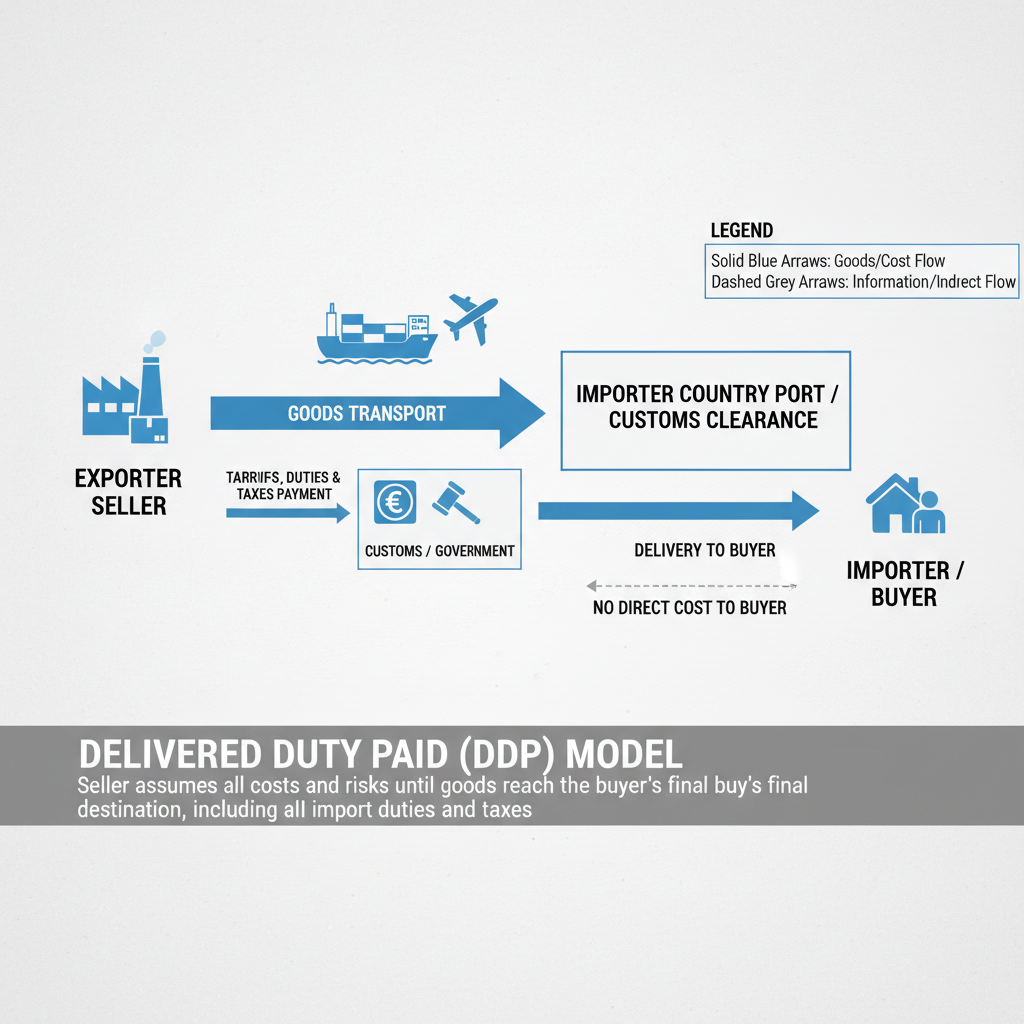
3.1. The Delivered Duty Paid (DDP) Model
The Delivered Duty Paid (DDP) model is a streamlined approach where products deliver directly from the country of origin to the U.S. consumer without intermediate stops. The U.S. subsidiary becomes the Importer of Record, managing import declarations and duties based on the true cost of goods.
This method ensures that U.S. consumers face no surprises regarding costs upon delivery, as all duties and fees are included in the purchase price. For you, this means enhanced operational efficiency, lowered import costs, and better protection of commercial data from customer visibility.
4. Practical Benefits of Operating a U.S. Subsidiary
Aside from reduced import costs, establishing a U.S. subsidiary provides several key advantages:
Financial Access: Gain access to U.S. financial systems, including opening a corporate bank account and using U.S. payment gateways like Shopify Payments to process transactions as a local entity.
Tax Efficiency: Benefit from tax calculations based on profit rather than revenue, as operating costs and product acquisition expenses decrease the taxable base.
Cost Allocation Optimization: Through well-crafted resale or licensing agreements, you can optimize cost distributions across your corporate group more effectively.
Operating a U.S. subsidiary does come with responsibilities, such as compliance with state Sales Tax, Federal Income Tax, and Transfer Pricing regulations. Structuring these aspects correctly from the start is crucial to leveraging the full benefits.
5. Essential Components of Running a U.S. Subsidiary
Running a successful U.S. subsidiary involves integrating financial, logistical, and compliance systems. Here's what you need to consider:
5.1. Financial Infrastructure
Establishing a U.S. company requires an Employer Identification Number (EIN), a local business bank account, and a payment processing gateway to facilitate transactions in U.S. dollars.
5.2. Logistics Management
Utilizing global carriers like DHL, FedEx, and UPS under the DDP model ensures efficient customs clearance and comprehensive door-to-door delivery with duty payments handled upfront.
5.3. Compliance Strategies
Comprehensive bookkeeping and accounting services are essential for managing U.S. Sales Tax, Federal Tax obligations, and Transfer Pricing regulations. Engaging professionals familiar with U.S. compliance can help maintain transparency and legality.
FastLLC can assist with these critical components, providing formation services, EIN acquisition, and registered agent offerings, making the process smoother for non-resident business owners.
6. Deciding to Form a U.S. Subsidiary
The decision to establish a U.S. subsidiary should be viewed as a strategic move towards enhancing competitiveness, not merely as a tax strategy. Operating within the U.S. grants advantages that extend beyond simple tariff reductions. It allows you to effectively become a part of the local market, enhancing customer experiences and expanding growth potential in the largest e-commerce arena globally.
6.1. Competitiveness and Market Entry
By operating locally within the U.S., your business can sidestep many of the hurdles faced by external sellers, positioning you more favorably in terms of pricing and customer trust. With tariffs likely to remain high, integrating into the U.S. market becomes a key differentiator.
FastLLC's expertise can help you navigate the formation process, ensuring you meet all regulatory requirements while capitalizing on the opportunities that a U.S. presence offers.

In conclusion, for non-resident entrepreneurs, forming a U.S. subsidiary offers a path to minimize import tariffs and harness the full potential of the vast U.S. e-commerce market. By taking control over import processes and embracing the DDP model, you can enhance your pricing strategy and customer satisfaction. FastLLC is here to guide you through the complexities of U.S. company formation, providing the support you need to succeed.
7. Common Mistakes When Establishing a U.S. Subsidiary
While establishing a U.S. subsidiary can offer significant benefits, non-resident entrepreneurs often encounter pitfalls that can hinder their progress. Being aware of these common mistakes can help you avoid costly errors and streamline your entry into the U.S. market.
7.1. Neglecting State-Specific Requirements
Each U.S. state has its own regulations and requirements for business operations, including variations in tax rates, employment laws, and licensing. Entrepreneurs sometimes focus solely on federal requirements, overlooking state-specific obligations which can lead to compliance issues and fines.
Solution: Conduct thorough research on the specific requirements of the state in which you plan to establish your subsidiary. FastLLC offers guidance in navigating these local regulations, ensuring compliance from the onset.
7.2. Inadequate Market Research
Entering the U.S. market without comprehensive market research is a common error. Understanding consumer behavior, competitive landscape, and pricing strategies is crucial for success.
Solution: Invest time in conducting detailed market analyses to tailor your offerings to meet U.S. consumer expectations. Utilize tools and resources that provide insights into market trends and customer preferences.
7.3. Improper Financial Planning
Many businesses fail to account for the financial implications of establishing a subsidiary, such as initial setup costs, ongoing operational expenses, and cash flow management.
Solution: Develop a robust financial plan that includes all potential expenses and revenue streams. Consulting with financial advisors who understand the U.S. market can provide clarity and strategic direction.
8. Real-World Examples of Successful U.S. Subsidiary Formation
To better understand the potential of U.S. subsidiary formation, let’s examine real-world examples of international companies that have successfully navigated this path:
8.1. Company A: European Tech Firm
Company A, a tech firm based in Europe, faced steep import tariffs on its innovative gadgets. By establishing a U.S. subsidiary, they reduced their tariff costs significantly and improved their product pricing. This strategic move allowed them to compete directly with local tech companies, boosting their U.S. market share.
8.2. Company B: Latin American Apparel Brand
Company B, a fashion brand from Latin America, leveraged a U.S. subsidiary to enter the competitive U.S. market. They utilized the DDP model for seamless delivery, enhancing customer satisfaction by ensuring transparent pricing. Their U.S. presence enabled them to build a loyal customer base and expand their retail partnerships.
8.3. Company C: Asian Consumer Goods Manufacturer
Originally facing high tariffs, Company C transitioned to a U.S. subsidiary model. This allowed them to import goods based on production costs rather than retail prices. They optimized their supply chain efficiency and opened a direct-to-consumer sales channel, increasing their profitability and market presence.
9. Step-by-Step Guide to Forming a U.S. Subsidiary
Establishing a U.S. subsidiary may seem daunting, but breaking it down into manageable steps can simplify the process:
9.1. Step 1: Choose the Right Business Structure
Selecting an appropriate business structure (LLC, corporation, etc.) is crucial. Consider factors such as liability protection, taxation, and operational flexibility.
9.2. Step 2: Register Your Business
Register your subsidiary with the relevant state authorities, ensuring compliance with state-specific requirements. Acquire necessary licenses and permits.
9.3. Step 3: Obtain an EIN
Apply for an Employer Identification Number (EIN) with the IRS. This is essential for opening bank accounts and managing tax obligations.
9.4. Step 4: Set Up Financial and Operational Systems
Establish a local business bank account and integrate payment processing systems. Implement logistics and supply chain solutions tailored to U.S. operations.
9.5. Step 5: Develop a Compliance Strategy
Ensure robust compliance with federal and state tax regulations, employment laws, and industry standards. Engaging with legal and financial advisors can help navigate these complexities.
By following these steps and leveraging FastLLC's expertise, non-resident entrepreneurs can successfully form a U.S. subsidiary and capitalize on the abundant opportunities in the U.S. e-commerce market.
Frequently Asked Questions
Forming a U.S. subsidiary allows non-residents to reduce import tariffs, gain financial access, optimize tax liabilities, and enhance operational control within the U.S. market.
A U.S. subsidiary acts as the Importer of Record, allowing tariffs to be based on production cost rather than retail price, thus reducing the overall tariff burden.
The DDP model involves products being shipped directly to U.S. consumers with all import duties prepaid by the U.S. subsidiary, ensuring a seamless purchasing experience.
A U.S. subsidiary requires an EIN, a local bank account, and a payment gateway to process USD transactions efficiently.
FastLLC offers comprehensive services including company formation, EIN acquisition, and registered agent services, simplifying the process for non-resident entrepreneurs.
Share this article



Ready to start your US LLC?
Formation, EIN, registered agent, and ongoing compliance — handled in one place.
Get Started for Free