
How to Manage Sales Tax for SaaS Companies: A Comprehensive Guide for Non-Resident US Founders

Launching and scaling a Software as a Service (SaaS) company can be an exhilarating journey filled with challenges and opportunities. As a founder based outside the United States eyeing the extensive American market, one key hurdle you’ll inevitably face is navigating the complex realm of sales tax compliance. This guide is designed to demystify the process, providing you with essential insights into managing sales tax effectively while focusing on growing your business.
1. Understanding Sales Tax in the SaaS Industry
1.1 What is Sales Tax and Why Does It Matter?
Sales tax is a consumption tax imposed by the government on the sale of goods and services. In the SaaS industry, sales tax compliance can be particularly intricate due to varying state laws and interpretations. For non-resident founders, understanding these obligations is crucial to avoid unexpected liabilities and penalties.
1.2 How Sales Tax Applies to SaaS
Unlike tangible goods, SaaS products are typically digital services, making it less straightforward to determine tax applicability. Each state in the US has its own rules about taxing digital goods, and whether a SaaS product is taxable often depends on specific state legislation.
2. Key Challenges in SaaS Sales Tax Compliance
2.1 Identifying Nexus
The concept of 'nexus' refers to the level of connection between a business and a state, which determines tax obligations. For SaaS companies, nexus can be triggered by having a significant volume of sales or a certain number of customers in a state. The sudden emergence of nexus can lead to unforeseen compliance burdens.
2.2 Constantly Evolving Tax Laws
State tax laws frequently change, affecting rates, filing deadlines, and taxability rules. This variability can make compliance a moving target, especially if your SaaS company operates across multiple jurisdictions.
- Economic Nexus: Many states have adopted economic nexus rules, where exceeding a revenue or transaction threshold creates tax obligations.
- Hybrid Taxation Models: Some states apply traditional goods taxation frameworks to digital services, complicating compliance.
2.3 Administrative Burden
Complying with sales tax involves several administrative tasks such as registration, calculation, collection, and remittance of taxes. For small teams, these tasks can be time-consuming and distract from core business activities. FastLLC can streamline this process by handling these administrative tasks as part of their formation service.
3. Strategies for Efficient Sales Tax Management
3.1 Automating Compliance Processes
To mitigate the complexities of sales tax management, many SaaS companies turn to automated solutions. These tools can track sales activities, calculate tax liabilities, and automate filing processes, ensuring timely compliance and reducing the risk of human error.
3.2 Engaging Tax Professionals
Working with tax experts can provide valuable insights into optimizing your tax strategy and understanding nuanced regulations. They can help interpret state-specific laws and ensure your company is leveraging all available exemptions and credits.
3.3 Leveraging Technology for Nexus Monitoring
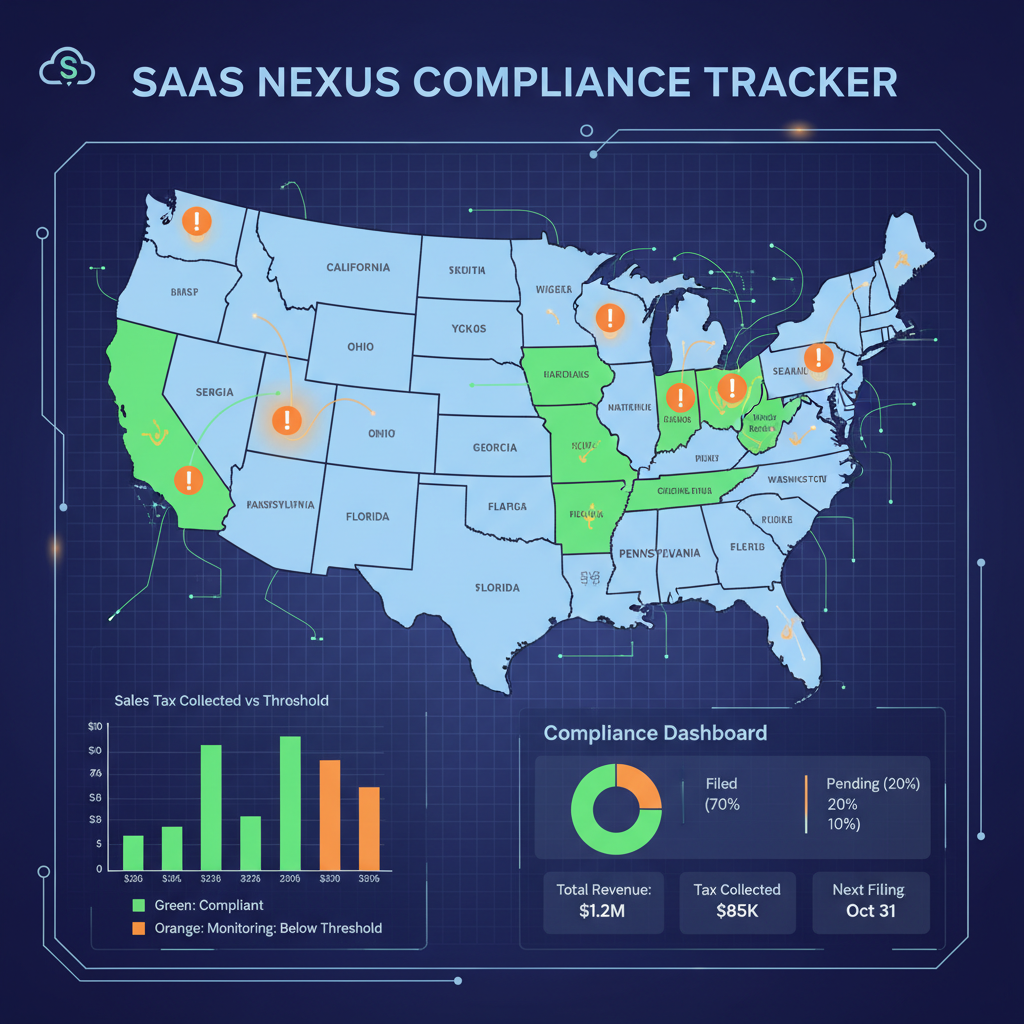
Real-time monitoring tools can help track sales activities and alert you when you are nearing nexus thresholds in specific states. This proactive approach enables timely registration and compliance.
4. Essential Tools and Resources for Sales Tax Compliance
4.1 Choosing the Right Software
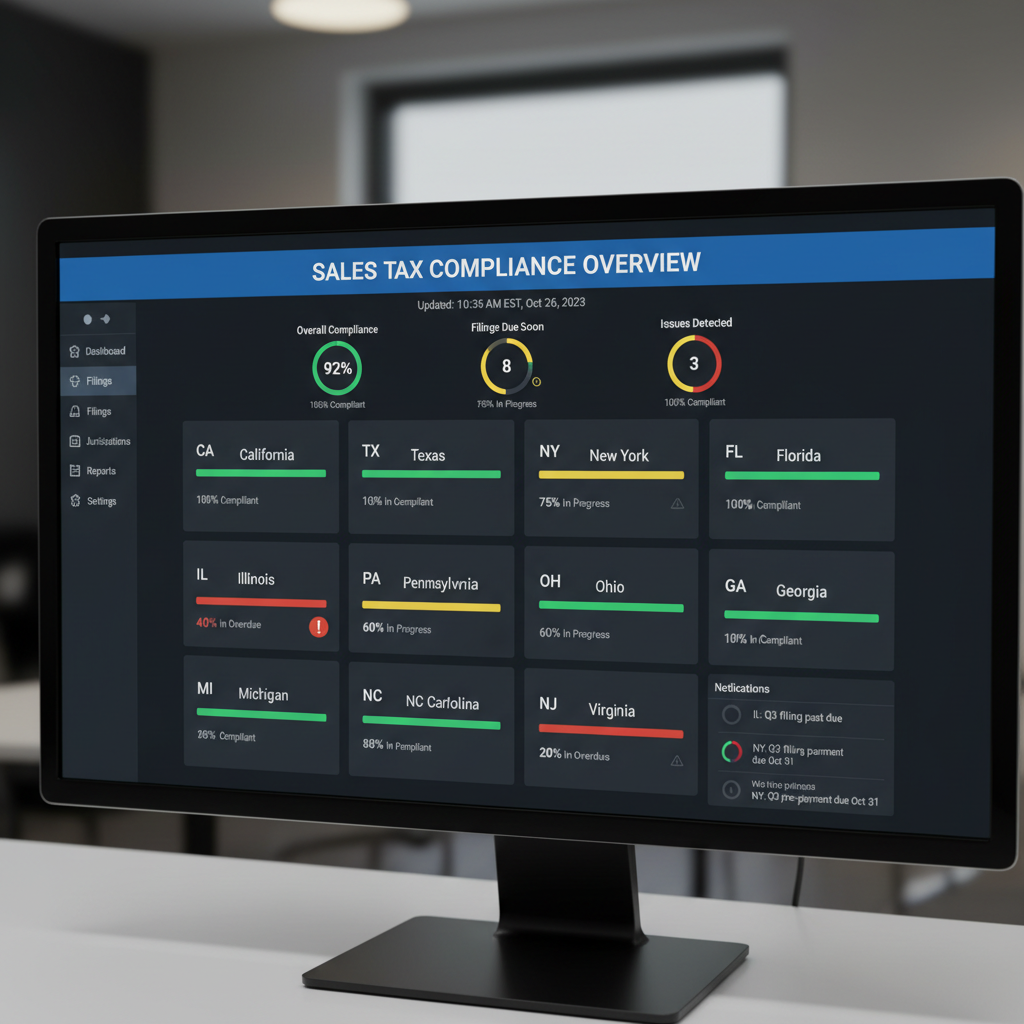
The market offers various software solutions designed to streamline sales tax management for SaaS businesses. Key features to consider include integration capabilities, real-time updates, and a user-friendly dashboard.
| Feature | Benefits |
|---|---|
| Real-Time Nexus Tracking | Identifies where you may have sales tax obligations. |
| Automated Filing and Remittance | Reduces manual effort and ensures timely payments. |
| Comprehensive Reporting | Provides transparency and data-driven insights for decision-making. |
4.2 Utilizing SaaS-Specific Tax Management Platforms
Platforms specifically designed for SaaS businesses can help manage the unique challenges of sales tax compliance in the digital product space. These solutions often provide integrated compliance services, reducing the need for multiple providers.
5. Case Study: Successful Sales Tax Compliance
5.1 Real-World Example
Consider a SaaS company based in Europe that expanded its operations into the US market. Initially, the founders struggled with understanding and managing sales tax compliance across various states. By partnering with a tax software provider and engaging with local tax professionals, they were able to establish a robust compliance framework that scaled with their business growth.
5.2 Lessons Learned
This case demonstrates the importance of investing in the right tools and expertise early on. By doing so, the company not only avoided costly penalties but also maintained focus on scaling its operations.
6. Taking the Next Steps with FastLLC
6.1 FastLLC: Your Partner in US Company Formation
FastLLC offers comprehensive support for non-resident founders forming a US entity. From obtaining an Employer Identification Number (EIN) without an SSN to providing registered agent services, FastLLC simplifies the complex process of establishing a US presence.
6.2 Achieving Compliance and Growth
With FastLLC, you gain access to tools and resources that streamline administrative tasks like sales tax compliance, allowing you to focus on what truly matters—growing your business. Utilize our services to navigate the regulatory landscape confidently and efficiently.
Taking the plunge into the US market can open doors to vast opportunities for your SaaS business. By understanding sales tax obligations and leveraging the right resources, you can ensure compliance and position your company for sustainable growth. Consider taking the next step with FastLLC to streamline your journey into the US market, ensuring you have the support and guidance needed every step of the way.
7. Common Mistakes to Avoid in SaaS Sales Tax Compliance
7.1 Overlooking State-Specific Regulations
One of the most frequent mistakes SaaS companies make is not fully understanding the specific sales tax regulations of each state. This oversight can lead to non-compliance penalties. Each state has unique rules regarding what constitutes a taxable service, and failing to do thorough research can result in unexpected liabilities.
7.2 Ignoring Economic Nexus Thresholds
With the rise of economic nexus laws, many states have set specific revenue or transaction thresholds that trigger tax obligations. A common mistake is failing to monitor these thresholds continuously. If your sales exceed these limits, you must ensure compliance promptly to avoid being flagged for non-compliance.
7.3 Neglecting to Update Compliance Protocols
Tax laws are dynamic and frequently updated. Some companies overlook the importance of regularly reviewing and updating their compliance protocols. This neglect can lead to outdated practices that do not align with current laws, increasing the risk of audits and fines.
8. Comparing SaaS Sales Tax Software Solutions
| Software | Key Features | Pricing | Best For |
|---|---|---|---|
| TaxJar | Automated filing, Nexus insights, Detailed reporting | Starts at $19/month | Small to medium-sized businesses |
| Avalara | Real-time rate calculations, Returns filing, Extensive integrations | Custom pricing | Large enterprises |
| Sovos | Sales and use tax reporting, Managed services, Compliance automation | Custom pricing | Businesses with complex tax needs |
9. Step-by-Step Guide to Implementing a Sales Tax Strategy
9.1 Assessing Your Sales Tax Liability
Begin by conducting a thorough analysis of your sales activities across different states. Determine where you have established nexus and the specific tax obligations in those states.
9.2 Selecting the Right Tools and Partners
Choose a tax software solution that aligns with your business size and complexity. Consider partnering with tax professionals who specialize in SaaS companies to ensure you have expert guidance.
9.3 Establishing Internal Processes
Create a clear internal workflow for handling sales tax calculations and filings. Assign responsibilities within your team and set up regular reviews to ensure compliance stays on track.
9.4 Monitoring and Adjusting Your Strategy
Implement real-time monitoring of sales activities to quickly identify when you approach nexus thresholds. Regularly review and adjust your compliance strategy to accommodate any changes in tax laws or business operations.
Frequently Asked Questions
Sales tax nexus for SaaS companies refers to the connection that obligates them to collect sales tax in a given state. This can be triggered by sales volume or the number of customers in that state.
SaaS companies can stay compliant by using automated tools for tracking sales activities, engaging tax professionals for guidance, and staying informed about changing state laws.
Sales tax laws are complex for SaaS companies due to varying state regulations, frequent legislative changes, and differing interpretations of digital services' taxability.
Yes, non-resident founders can obtain an EIN without an SSN by using services like FastLLC, which assist in navigating the US tax system requirements.
A sales tax management platform can automate compliance processes, track nexus status, ensure timely filings, and provide comprehensive reporting, reducing administrative burdens.
Share this article



Ready to start your US LLC?
Formation, EIN, registered agent, and ongoing compliance — handled in one place.
Get Started for Free