
Comprehensive Guide to U.S. Business Taxes for Non-Resident Founders
Establishing a business in the United States as a non-resident founder can be a thrilling endeavor, offering access to a vast market and numerous opportunities. However, it also comes with the responsibility of navigating a complex tax landscape. Understanding the various taxes applicable to U.S. companies is crucial to ensure compliance and avoid costly penalties. This guide provides a detailed breakdown of the taxes U.S. companies must adhere to, helping you focus on growing your business.
1. Understanding the U.S. Tax System for Businesses
The U.S. tax system is multifaceted, with taxes levied at federal, state, and local levels. Each type of tax has its own rules, forms, and deadlines, which vary depending on the business structure and location. For non-resident founders, these complexities may seem daunting, but with the right guidance, compliance can be achieved seamlessly.
1.1 Federal Taxes
Federal taxes are imposed by the Internal Revenue Service (IRS) and apply to all entities operating within the United States. C-Corporations face a flat federal tax rate of 21% on their profits. This rate is competitive compared to some other countries, making the U.S. an attractive option for global businesses. Regardless of profitability, every active corporation must file a federal tax return annually.
- Form 1120: Used by C-Corporations to report income, deductions, and credits.
- Form 1120-S: For S-Corporations to report pass-through income and losses.
- Form 1065: Required for partnerships and multi-member LLCs to detail partner income shares.
Deadlines differ based on business structure. C-corporations must file by the 15th day of the 4th month post-fiscal year, usually April 15th for calendar-year filers. S-Corporations and partnerships have a March 15th deadline.
1.2 State Taxes
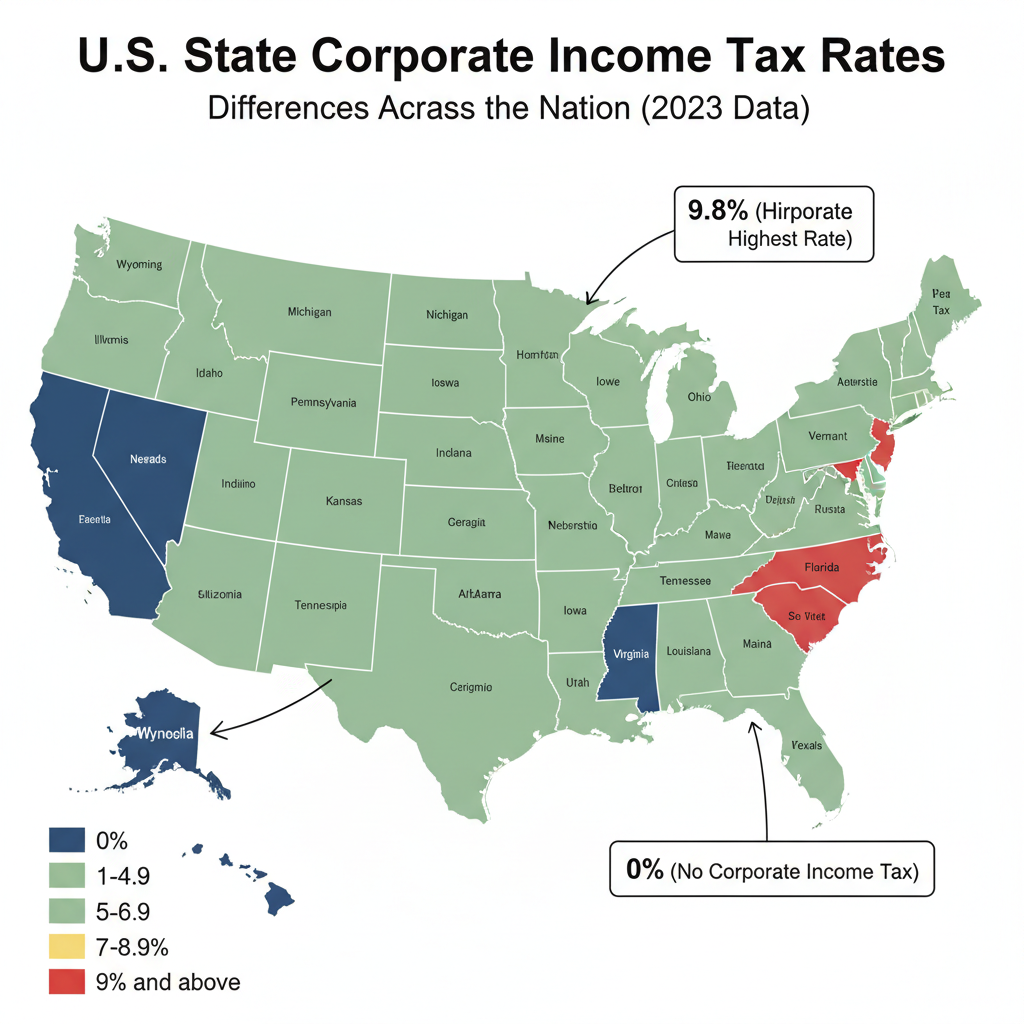
State taxes vary significantly, influenced by the specific state's tax laws where your business operates. Some states like Wyoming and Nevada do not impose corporate income taxes, while others, such as Minnesota and Illinois, have higher rates.
Each state also requires specific forms to be filed, such as California's Form 100 or New York's Form CT-3. These forms are typically available through each state's Department of Revenue.
| State | Corporate Income Tax Rate |
|---|---|
| Wyoming | 0% |
| Illinois | 9.5% |
| Minnesota | 9.8% |
State taxes also encompass sales and employment taxes, which we will discuss further in this guide.
2. Navigating Local and Franchise Taxes
2.1 Local Taxes
Local taxes are set by city or county governments and can vary significantly within the same state. These taxes fund local initiatives such as infrastructure and public services.
Typical local taxes include property, sales, and gross receipts taxes. Major cities like San Francisco may impose additional taxes, adding complexity to your tax obligations. Consulting local tax authorities or professionals is advisable to avoid compliance issues.
2.2 Franchise Taxes
Franchise taxes are a state-imposed fee for the privilege of operating within a state. Unlike corporate income taxes, franchise taxes might be based on net worth, capital stock value, or gross receipts. Thirteen states levy franchise taxes, each with its own criteria and computation methods.
- Exemptions: Some businesses might qualify for exemptions based on size or nonprofit status.
- Complexity: States like Delaware and Texas have intricate calculation methods, requiring careful compliance.
Franchise tax deadlines typically align with state income tax deadlines, reinforcing the importance of timely filings.
3. Employment and Other Applicable Taxes
3.1 Employment Taxes
If your business employs staff, you must handle employment taxes, which cover Social Security, Medicare, and unemployment insurance. Under the Federal Insurance Contributions Act (FICA), employers and employees each contribute 7.65% to Social Security and Medicare.
For unemployment taxes under the Federal Unemployment Tax Act (FUTA), the standard rate is 6% on the first $7,000 of employee wages, with potential credits reducing this rate.
- Form 941: For quarterly federal tax returns.
- Form 940: For annual FUTA returns.
3.2 Other Taxes
Beyond standard taxes, other taxes may apply based on business activities:
- Excise Taxes: Applied to specific goods like fuel and alcohol.
- Property Taxes: For businesses owning real estate or tangible items.
- Environmental Taxes: Relevant for industries impacting the environment.
4. Tax Implications Based on Business Structure
4.1 C-Corporations
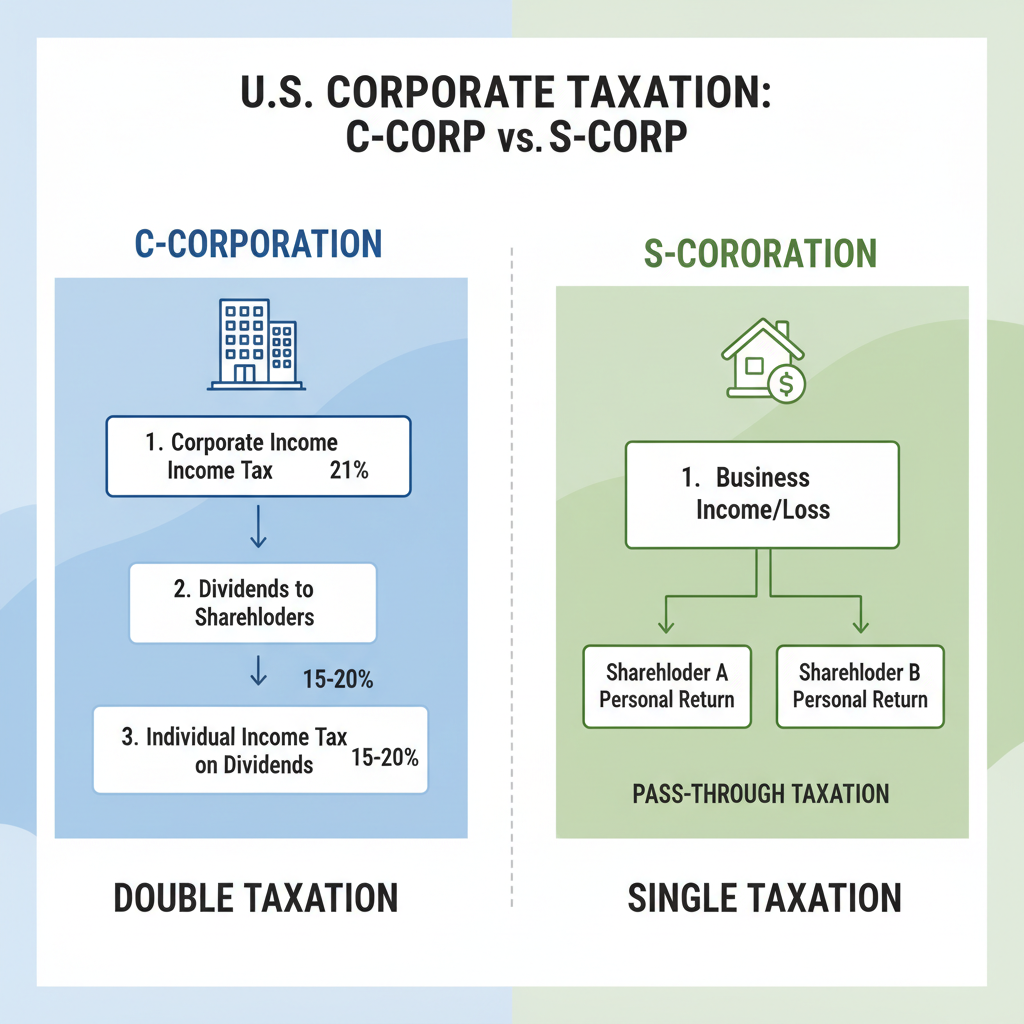
C-Corporations are subject to double taxation, where both corporate income and shareholder dividends are taxed. However, they offer benefits for reinvestment in growth, as retained earnings are only taxed at the corporate level.
4.2 S-Corporations and Partnerships
S-Corporations and partnerships benefit from pass-through taxation, where business income is reported on shareholders' or partners' personal tax returns, avoiding double taxation.
4.3 Limited Liability Companies (LLCs)
LLCs default to partnership taxation but can opt for S or C-corporation tax status. Some states might impose additional franchise or minimum taxes on LLCs.
5. Streamlining Your Tax Processes
Given the complexities involved in U.S. tax compliance, especially for non-resident business owners, partnering with a service like FastLLC can simplify processes. FastLLC offers assistance in acquiring necessary tax identification numbers and ensures timely filings, reducing the burden on founders. Our experts are available to guide you through federal, state, and local tax requirements, ensuring your focus remains on growing your business.
In conclusion, while U.S. taxes can be intricate, understanding your obligations and leveraging professional resources can keep you compliant and focused on expansion. For more personalized guidance, consider consulting with tax professionals or services like FastLLC to navigate the complexities of U.S. business taxation effectively.
6. Common Tax Filing Mistakes and How to Avoid Them
Even seasoned business owners can find themselves making errors during tax filing season. These mistakes can result in penalties or delayed filings, affecting your business operations. Understanding these common pitfalls can help you avoid them.
6.1 Misclassifying Employees and Independent Contractors
One frequent mistake is misclassifying workers. Employers often confuse independent contractors with employees, impacting tax withholding and reporting obligations. Misclassification can lead to penalties and back taxes. To avoid this, ensure you're familiar with IRS guidelines regarding employment status.
- IRS Guidelines: Review the IRS criteria for worker classification, including control over work and financial aspects.
- Documentation: Maintain clear documentation defining the nature of the relationship with your workers.
6.2 Incorrectly Reporting Business Expenses
Business expenses must be accurately reported and categorized. Common errors include claiming personal expenses as business expenses or failing to substantiate claims with proper documentation. Such mistakes can trigger audits or disallowance of deductions.
- Receipt Management: Keep detailed records of all business transactions and receipts.
- Expense Categories: Familiarize yourself with deductible expenses and ensure proper categorization.
6.3 Missing Filing Deadlines
Deadlines vary by tax type and business structure. Missing these can result in late fees and interest charges. Many businesses overlook state-specific deadlines, which can complicate compliance.
- Calendar Alerts: Set reminders for all tax filing deadlines to ensure timely submissions.
- Professional Assistance: Consider hiring a tax professional to keep track of deadlines and filing requirements.
7. Real-World Examples of Successful Tax Compliance
Learning from real-world examples can provide insight into effective tax compliance strategies. Here we explore how various companies have navigated the U.S. tax landscape successfully.
7.1 Tech Startups
Tech startups, often with complex revenue models, face unique tax challenges. Companies like Airbnb have successfully managed their tax obligations by employing dedicated tax teams and leveraging technology for tracking and reporting.
- Technology Utilization: Implement software solutions for tracking revenue and expenses.
- Expert Teams: Assemble a team of tax experts to navigate complex tax issues.
7.2 Manufacturing Firms
Manufacturing firms such as Tesla have dealt with multi-state tax compliance due to their widespread operations. They successfully navigate these by maintaining detailed records and employing state-specific tax consultants.
- Record Keeping: Ensure meticulous record-keeping of all transactions across different states.
- State-Specific Advisors: Engage consultants knowledgeable about local tax laws in all operational states.
7.3 E-commerce Businesses
E-commerce platforms like Amazon handle a vast array of sales tax obligations across various jurisdictions. They achieve compliance through automated systems and constant monitoring of tax law changes.
- Automation Systems: Use automated systems to calculate and remit sales taxes.
- Continuous Monitoring: Regularly update practices in response to tax law changes.
8. Comparing Tax Software Solutions for Businesses
Choosing the right tax software can streamline compliance processes, especially for businesses with complex tax situations. Below is a comparison of popular tax software solutions suitable for U.S. businesses.
| Software | Features | Pricing | Best For |
|---|---|---|---|
| TurboTax Business | Comprehensive federal and state tax filing, easy-to-use interface | Starting at $170 | Small to mid-sized businesses |
| QuickBooks Online Accountant | Integrated accounting and tax preparation | Custom pricing | Accountants and tax professionals |
| H&R Block Business | Tax filing with live support | Starting at $85 | Businesses seeking expert guidance |
When selecting tax software, consider your business size, budget, and specific tax needs to find the most suitable solution.
Frequently Asked Questions
U.S. businesses must pay federal, state, and local taxes. Additionally, depending on the state, franchise taxes may apply.
Business structure determines tax obligations; C-Corps face double taxation, while S-Corps and partnerships benefit from pass-through taxation.
Yes, non-resident founders need an EIN to file taxes and manage other business activities in the U.S.
Yes, services like FastLLC assist with EIN applications, tax filings, and compliance, simplifying the tax process for non-resident business owners.
A franchise tax is a state-imposed fee for the privilege of operating within that state, based on factors like net worth or gross receipts.
Share this article



Ready to start your US LLC?
Formation, EIN, registered agent, and ongoing compliance — handled in one place.
Get Started for Free